
Predatory Plants: Answer Key
1. Have the Flowers or Bogs & Fens Honor.
For tips and instruction see AY Honor Flowers. For tips and instruction see AY Honor Bogs & Fens.
2. What characteristics make a plant a predatory plant?
-
It traps and kills.
-
It digests and absorbs part or all of its prey.
-
It utilizes the nutrients from its prey.
-
The traps are leaf modifications. The flowers are not involved in the trapping but are for reproduction.
-
The nutrients are minerals (primarily nitrogen) and not a source of energy.
-
The process of trapping, digesting, and assimilation of nutrients has a relatively high energy expenditure. It is preferable to obtain such nutrients vía a non-carnivorous method.
-
Some carnivorous plants move between carnivorous and non-carnivorous depending on the current environment. Some permanently “convert” to non-carnivorous.
3. What is a murderous plant? Explain the difference between murderous and predatory plants. Give an example of a species of murderous plant that is not predatory.
Although carnivorous plants can be thought of as murderous, the term is usually limited to plants that conspicuously kill victims without utilization of prey for nutrients. It may be used as a defense.
-
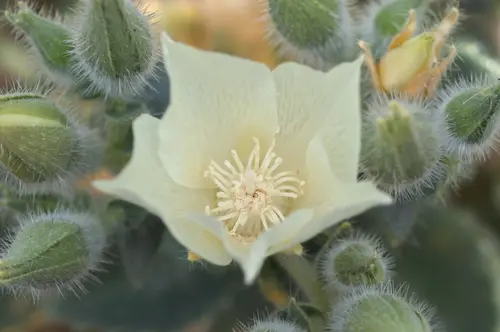
Eucnide urens (Desert Rock Nettle) Aphids attack plants; syrphid fly larvae attack aphids; syrphid flies are killed by spines on plants, whose larvae are destroyed by attacking aphids.
-
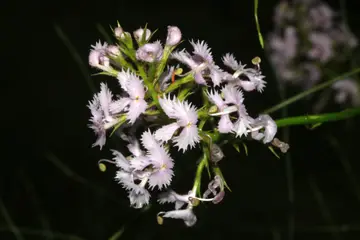
Stylidium laciniatum (Tattered Triggerplant) Mucilage (glue)
-
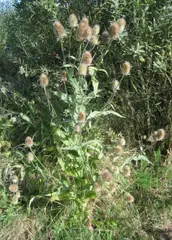
Dipsacus fullonum (Wild Teasel) Euroasia, Africa
-
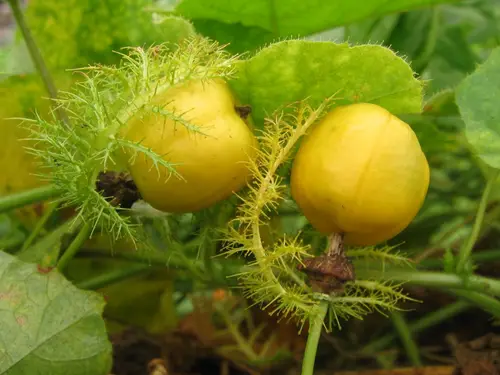
Passiflora foetida (Stinking Passionflower) Mucilage; Southwest USA, Central America
4. What environmental conditions favor predatory plants?
Carnivorous plants absorb nutrients from prey that cannot be adequately obtained from more conventional means. Some nutrient poor soils or habitats host carnivorous plants. Prime examples are bogs and fens with high acidity (low pH) and low available nitrogen. The low pH (high acidity) prevents nitrifying bacteria from converting ammonia to nitrites and nitrates.
The nutrients that may be lacking are nitrogen (most frequent), calcium, phosphate and iron.
Occasionally, they may be located in arid locales.
If environmental conditions change, the percent of carnivorousness may change from significant to none.
5. What are the two categories of mechanisms used by predatory plants for trapping and consuming prey?
There are two general types of traps: Active and Passive.
- Active: Snap traps, Bladder traps, some Adhesive (Flypaper)
- Passive: Pitfall, Lobster pot, some Adhesive (Flypaper)
There are also combination traps.
6. What is the process of “digestion” like in these plants and how do they get the necessary nutrients from the insects?
7. Discover if there are ways that murderous or predatory plants can be harmful to humans and explain how.
Predatory plants cannot by trap and digest persons. A small piece of skin was placed in a Venus flytrap and after 2 weeks was residual “mush.” However, dead skin has no defensive or reparative properties and would disintegrate if left alone.
Trying to eat a predatory plant may have adverse effects from chemicals, i.e. cyanide.
8. List characteristics of the following types of predatory plants. Create an organized image notebook or slideshow with names, brief descriptions and images to illustrate what was learned about each species.
8a. Pitfall traps
- The body cavity is called phytotelmata, which contains varying volumes of digestive fluids.
- Bait: Odor, color (may be ultraviolet), variation in light.
- Trapping assets: Slippery lining, sticky lining and directional “hair” or bristle.
i
Pitcher:
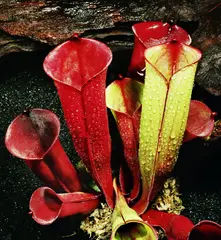
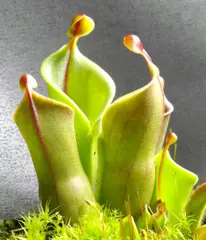
Simple (2 species)
-
Rolled leaf without lid; folded leaf open to air; to avoid overflowing from rain, may have side pores; produces fewer digestive fluids than Nepenthes; may use rainwater to expand volume.
-
Found in bogs, fens and wetlands.
-
Limited to South America.
-
Digestion is usually mutualistic from bacteria only, but on occasion may produce enzymes.
-
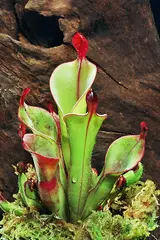
Heliamphora chimantensis (Sun pitcher plant)
-
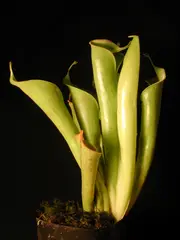
Heliamphora tatei, has enzymes
-
-
Hooded (3 species)
-
Rolled leaf with a lid; to prevent overflowing from rainwater, has a hood or folded lid (operculum) to control water level.
-
Primarily found in Southeast Asia, but can be found anywhere else (except Antarctica).
-
Digestion uses enzymes and bacteria.
-
Lining of pitcher can be waxy (better for ants and walking prey) or viscoelastic (better for flies and flying prey).
-
Can be colorful and beautiful.
-
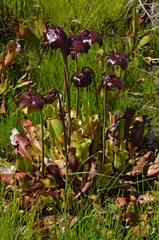
Sarracenia purpurea (Purple pitcher plant)
-
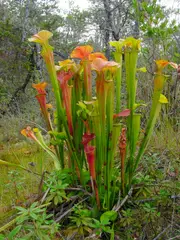
Sarracenia oreophila (Green pitcher plant)
-
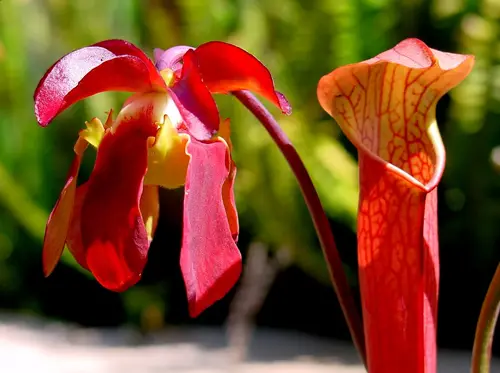
Sarracenia rubra (Sweet pitcher plant)
-
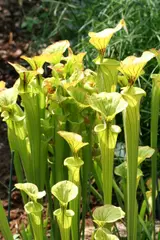
Sarracenia flava (Yellow pitcher plant)
Balloon (2 species)
-
Operculum with “balloon”; forms a balloon dilatation at the beginning of descending portion; may have a shepherd’s crook at the top.
-
Bogs and wetlands.
-
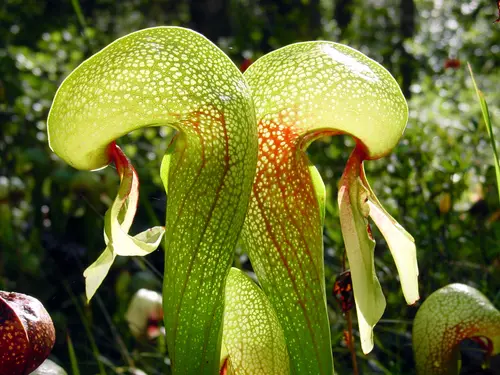
Darlingtonia californica (Cobra lily)
-
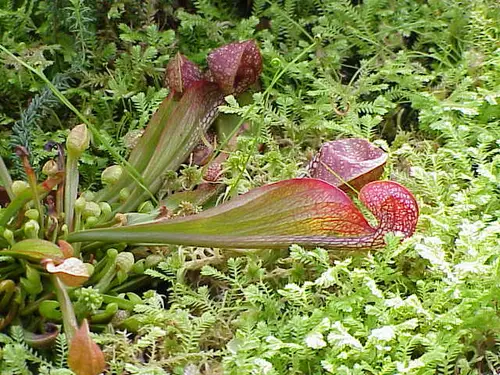
Sarracenia psittacina (Parrot pitcher plant)
-
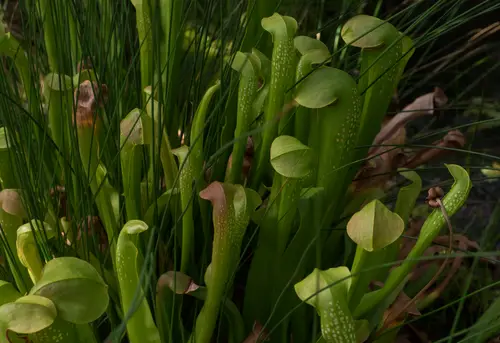
Sarracenia minor (Hooded pitcher plant)
ii
Monkey cup (3 species)
-
Apparently monkeys have been seen drinking from “cups.”
-
A distinctive globular trap at the end of leaf tendril, which is an extension of the leaf midrib; possesses an operculum.
-
If not nutrient challenged, may not form a pitcher.
-
May have a lower pitcher that is different from an upper pitcher (occasionally may have 1 or 2 additional intermediate pitchers). The lower pitcher is usually larger, more colorful, has “wings” and sits on the ground. The tendril attaches in front or the side of the cup. It forms when plants are young and more rosette. The upper (aerial) pitcher is smaller, often more delicate with the tendril attaching at the rear. It forms when the plant is more mature and a climbing vine. The tendril may have “curls” to aid in climbing. Usually no “wings.”
-
In the same plant, there may be different linings. The lower waxy lining for ants and walking prey, and the upper viscoelastic lining for flying prey.
-
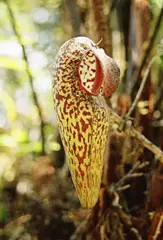
-
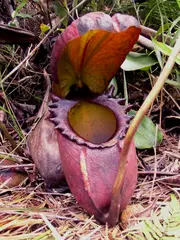
Nepenthes rajah (King pitcher plant) May ingest small mammals/reptiles
-
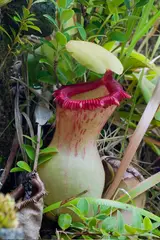
Nepenthes ventricosa Lower “tubby” red “lips.” Upper small, slender yellow.
-
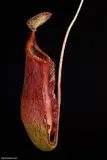
Nepenthes superba
-
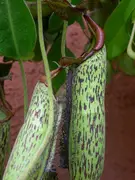
Nepenthes velvet

iii
Moccasin lid (1 species)
-
Opening rim (peristome – around an opening) is very pronounced, which secretes much nectar and has large thorny overhang.
-
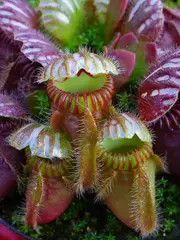
Cephalotus follicularis (Albany pitcher plant) Sun causes red color, shade causes green color
iv
Urn (1 species)
-
Tightly packed waxy leaf base.
-
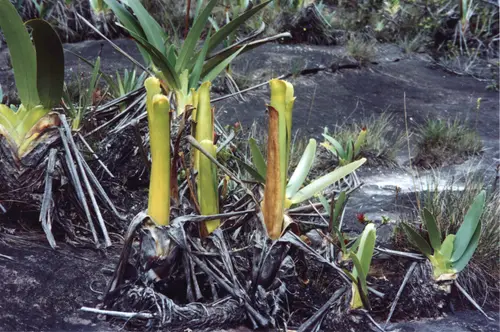
Brocchinia reducta (A bromeliad)
8b. Flypaper traps
i
Butterwort (2 species)
Passive
-
Mucilage or glue covers the leaves; the glands are on short or sessile stems.
-
Northern hemisphere, primarily Mexico.
-
Many plants have “animal sticking” properties but do not digest and utilize victims (murderous).
-
Some form shallow depressions and produce enzymes for digestion.
-
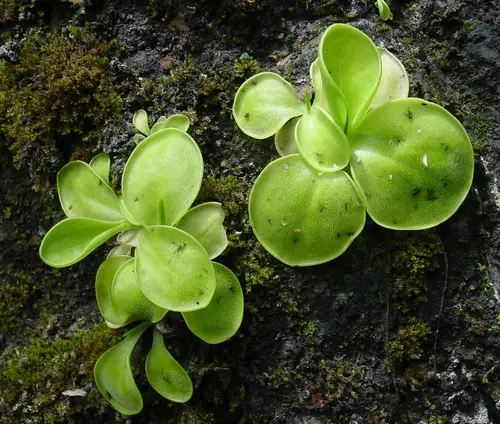
-
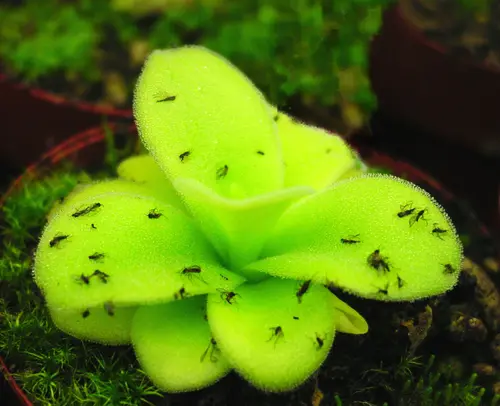
Pinguicula gigantea (Giant butterwort)
-
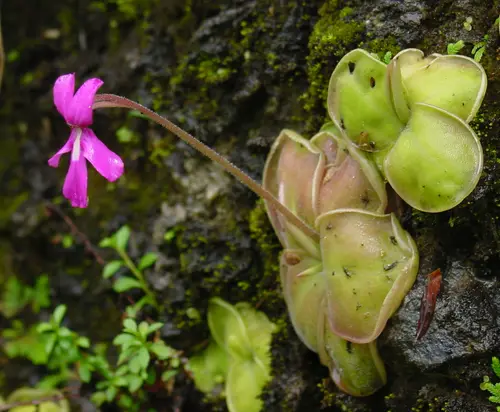
Pinguicula moranensis (Mexican butterwort)
-
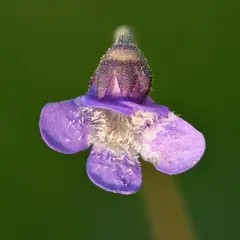
Pinguicula vulgaris (Common butterwort)
-
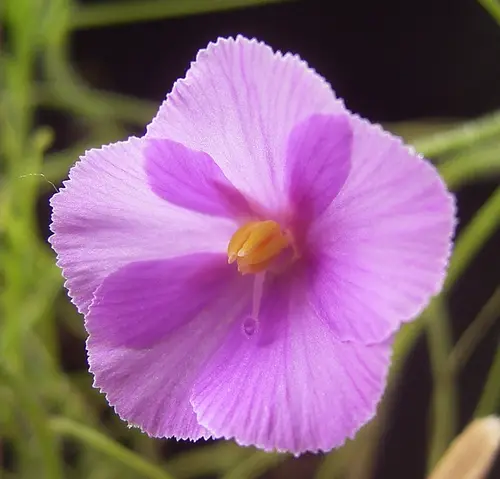
Byblis filifolia (Pago giant)
ii
Sundew (2 species)
Can be active
-
The mucilage glands are on long tentacles with globuli on fringes and ends.
-
More than 50% of species are in Australia.
-
The tentacles can grow and wrap around prey.
-
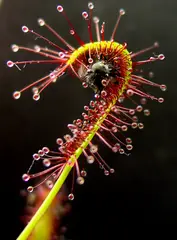
Drosera capensis (Cape sundew)
-
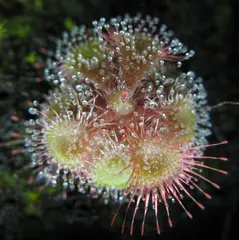
Drosera burmannii (Tropical sundew)
-
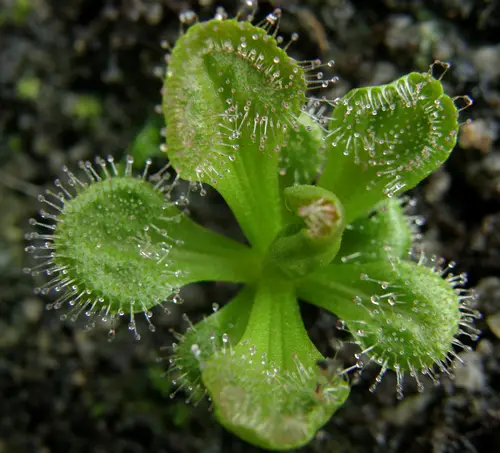
Drosera whittakeri (Scented sundew or Whittaker’s sundew)
-
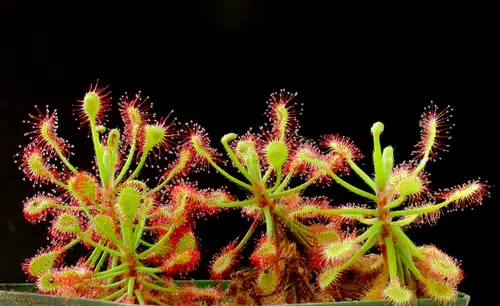
Drosera madagascariensis (Common butterwort)
-
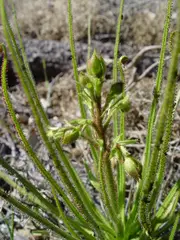
Drosophyllum lusitanicum (Portuguese sundew or dewy pine)
-
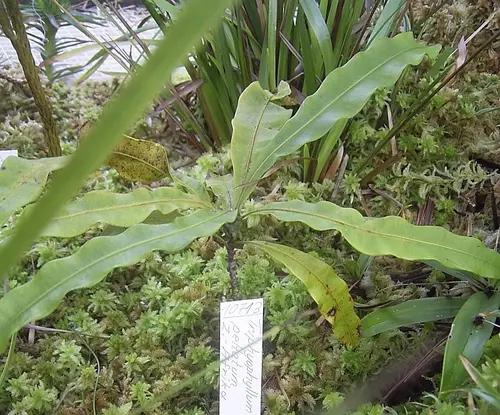
Triphyophyllum peltatum The second of three stages of leaf change is carnivorous.
8c. Snap traps (2 species)
Leaves divide into 2 blades that close rapidly on prey when stimulated.
Terrestrial
-
Very localized to the coast of the Carolinas of the USA.
-
Have convex-shaped leaves which require energy to form and, when stimulated quickly (1/10 second), become concave. Further struggling causes tighter closure with formation of air-tight seal (green stomach), which contains digestive enzymes and antimicrobs (kill bacteria and mold). The amount of struggling determines the size of prey and thus the amount of enzymes produced to match.
-
Attracts prey with volatile scent that mimics fruit and flowers.
-
Digestion of soft parts takes 1-2-weeks, leaving hard parts (exoskeleton) to be disposed of by wind or rain upon reopening.
-
Each trap may function 3-4 times then becomes unresponsive.
-
If it cannot seal (too large prey, etc.) trap becomes “infected” and necrotic (dies).
-
If there is no actual prey, it will open in about 12 hours and expel objects.
-
Usually walking prey, spiders, ants, beetles.
-
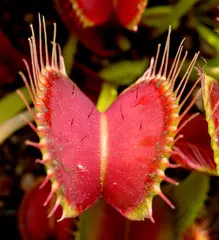
Dionaea muscipula (Venus flytrap)
Aquatic
-
Opposing blades actually close by a hinge mechanism.
-
Captures small marine invertebrates.
-
Europe, Africa, Asia, Australia
-
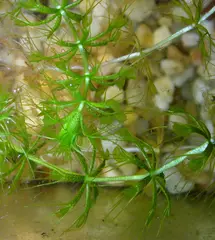
Aldrovanda vesiculosa (Waterwheel plant)
8d. Bladder traps (2 species)
-
Have many small bladder (vecculae) that pump ions out of its inside, creating an outward flow of water by “ion pressure” gradient (osmosis), resulting in a partial vacuum. There is a downward opening door on the inside of a small opening.
-
Appropriate stimulus opens door, sucks in prey and closes door in 1/60 second.
-
Called bladderworts.
-
Lacks roots. If aquatic, it floats. If terrestrial, it has anchor stems.
-
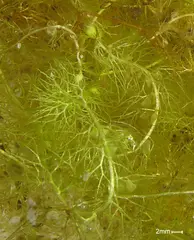
Utricularia vulgaris (Common bladderwort) Aquatic
-
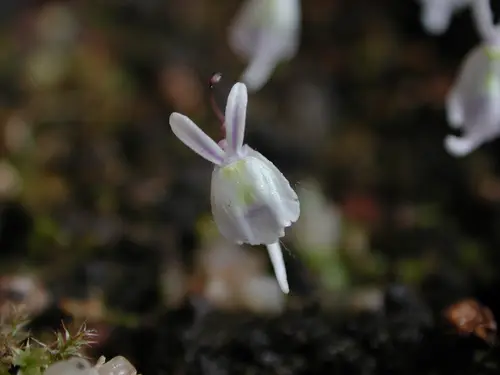
Utricularia sandersonii (Sanderson’s bladderwort)
8e. Lobster pot traps (1 species)
-
Easy to enter, hard to exit; Confusing “entering” light areas, while exit being dark; directional hairs.
-
Pigeon trap or corkscrew trap; spiraling tube with directional hairs.
-
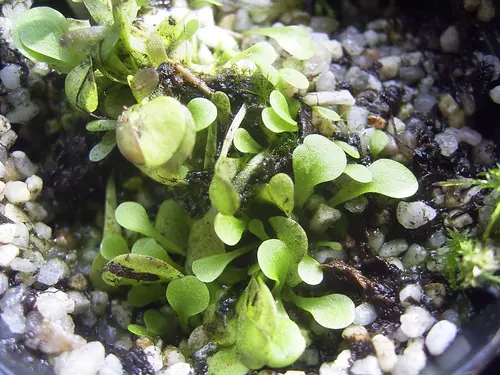
Genlisea violacea Aquatic and rootless; digests aquatic protozoa
-
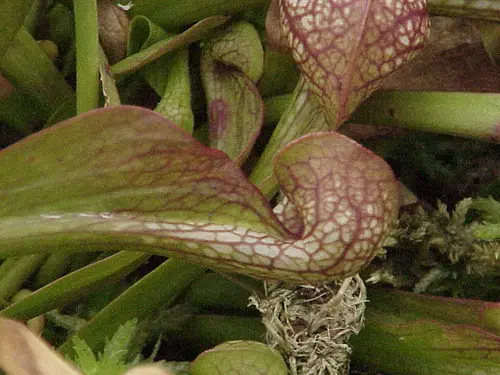
Sarracenia psittacina (Parrot pitcher plant)
-
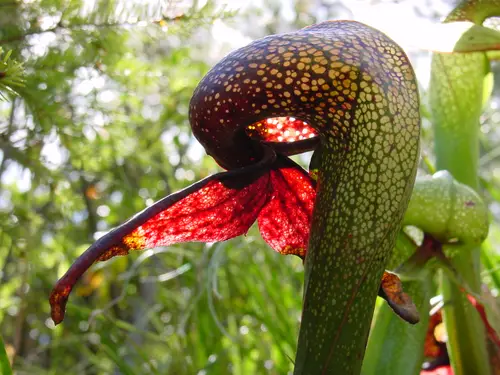
Darlingtonia californica (Cobra lily)
8f. Combination traps (1 species)
Flypaper and snap traps
-
Short mucilage glands traps while long non-adhesive tentacle “catapults” prey towards center.
-
Catapult can function only once.
-
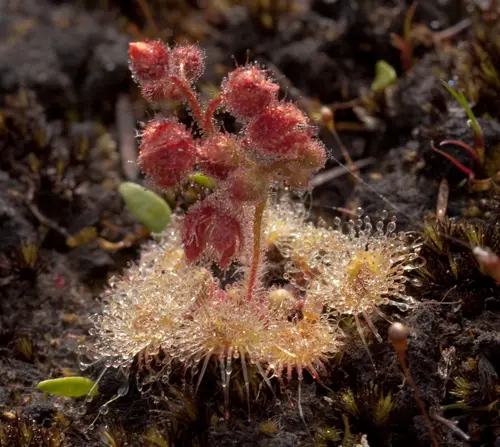
Drosera glanduligera (Pimpernel sundew)
Pitfall and flip trap
-
Operculum has waxy semi-slippery crystals on the lid. When rain hits the lid, this causes it to “flip” prey into the pitcher.
-
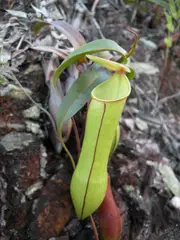
Nepenthes gracilis (Slender pitcher plant)
8g. Borderline traps (1 species)
-
Have trapping characteristics of carnivorous plants, but do not directly utilize the prey. The carcass is utilized by an intermediary organism before the host plant benefits from trapped prey.
-
Mucilage is resin-based, not water-based and inhibits digestion by host plant, but very sticky and can capture “large” prey.
-
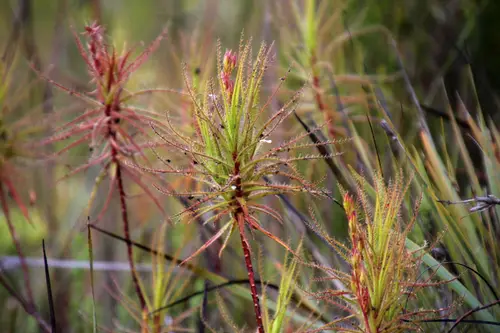
Roridula gorgonias (Gorgon’s dewstick, fly bush or fly catcher bush) Traps and kills prey. Then “assassin” bug eats prey. The waste from the bug is then utilized by the host plant (mutualistic symbiosis).
-
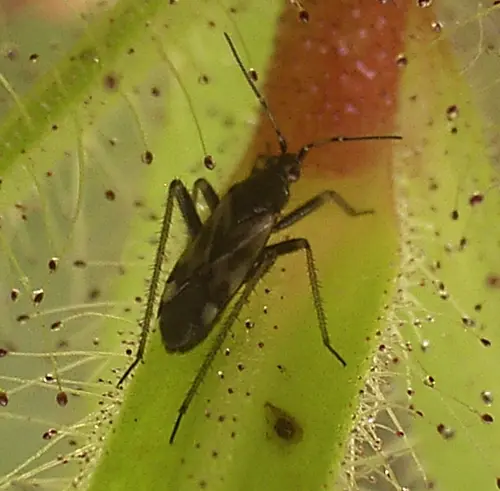
Pameridea roridulae Assassin bug
-
-
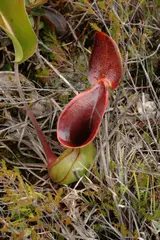
Nepenthes lowii (Low’s pitcher plant)
-
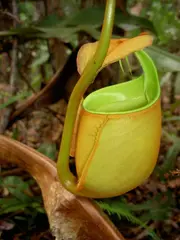
Nepenthes bicalcarata (Fanged pitcher plant)
-
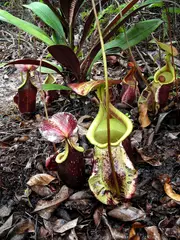
Nepenthes rafflesiana (Raffle’s pitcher plant)

9. Observe in person three predatory flowering plants in nature, botanical garden or nursery. Obtain one specimen and maintain it for a minimum of two months. Make written observations about the plant’s care and feeding.
Most nurseries have D. muscipula. Many are available online.
10. Predatory plants have characteristics that avail themselves to life applications. Find a life lesson and associated Bible passage that arise out of your study with predatory plants. Share this as a worship thought in a church or youth ministry setting.
- Things that are sweet and beautiful may not be safe.
- Needy people and needy plants are dangerous. A needy person will make decisions based on perceived or actual feelings of inferiority, loneliness, jealousy, desire for power, wealth, revenge, etc., at the expense of other people and what is right. Plants will kill animals for the need of nitrogen.
- Can adapt to non-ideal situations.
Possible Bible references:
There is a way that seems right to a man,
But its end is the way of death.
— Proverbs 14:12 (NKJV)
Then his father and mother said to him, “Is there no woman among the daughters of your brethren, or among all my people, that you must go and get a wife from the uncircumcised Philistines?”
And Samson said to his father, “Get her for me, for she pleases me well.”
— Judges 14:3 (NKJV)
This led to Samson’s blindness and suicide.
Then it happened one evening that David arose from his bed and walked on the roof of the king’s house. And from the roof he saw a woman bathing, and the woman was very beautiful to behold.
— 2 Samuel 11:2 (NKJV)
Then I took the little book out of the angel’s hand and ate it, and it was as sweet as honey in my mouth. But when I had eaten it, my stomach became bitter.
— Revelation 10:10 11:2 (NKJV)
Sweet in the mouth, bitter in the stomach
References
Adapted from AY Honors/Predatory Plants/Answer Key on the Pathfinder Wiki, licensed under CC BY-SA 3.0. See the original page's history for its authors.
Found a mistake? Report it.
This is an unofficial community site. It is not affiliated with or endorsed by the General Conference of Seventh-day Adventists, the North American Division, or the official Pathfinder Wiki. Content is adapted from the Pathfinder Wiki under CC BY-SA 3.0.